
Istiqlal Mosque: A Symbol of Pluralism in Jakarta
A stone’s throw from Jakarta Cathedral as a deliberate symbol of pluralism, the Istiqlal Mosque matches the magnificence of its predecessors.
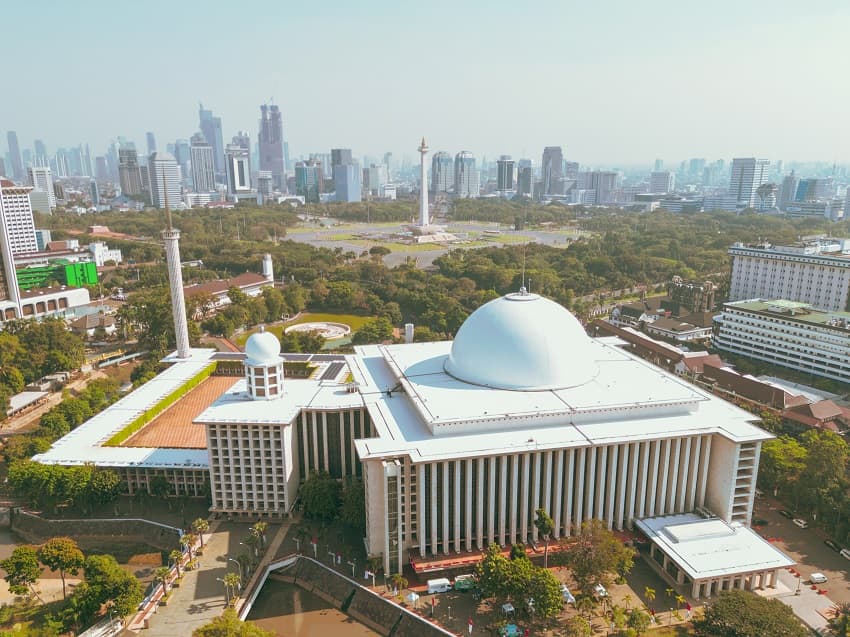
A stone’s throw from Jakarta Cathedral, deliberately placed as a symbol of pluralism, the colossal Istiqlal Mosque (Masjid Istiqlal) matches the magnificence of its predecessors.
Built by the post-colonial government, the ‘fervour of independence’ certainly comes through in the design of mosque, much as it did with Monas: visions of buildings exuding symbolism and monumentalism. This was certainly achieved, with the mosque now the largest in Southeast Asia, with a capacity of up to 200,000 people.
The name Istiqlal itself, translating to “Independence,” was carefully chosen to embody the spirit of a new Indonesia, free from colonial rule. It was Indonesia’s first President, Sukarno, who laid the mosque’s cornerstone in 1961, envisioning a structure that would reflect the nation’s diversity and its status as the world’s largest Muslim-majority country. The mosque was inaugurated on 22 February 1978 by President Suharto, marking a monumental chapter in modern Indonesian history.
With its vast dome and singular minaret, Masjid Istiqlal’s design was a testament to the preference for modernism of its architect, a Batak-Christian named Friedrich Silaban, who also designed the Gelora Bung Karno Sports Complex in Senayan. Much like Monas, symbolism was imbued into the design of Istiqlal: the mosque’s dome measures 45 metres in diameter to match the year of independence, 1945; while its 99.6 metre-high minaret is a nod to the 99 names of Allah in Islamic tradition.
As a symbol of tolerance, in December 2020 construction started for a passageway that would connect the Jakarta Cathedral to Istiqlal Mosque, this was completed in September 2021. Named ‘Terowongan Silaturahmi’ (Tunnel of Friendship), the 28-metre has already been used by Pope Francis in September 2024 and was officially inaugurated by President Prabowo Subianto in December 2024.
As a symbol of tolerance, in December 2020 construction started for a passageway that would connect the Jakarta Cathedral to Istiqlal Mosque, this was completed in September 2021.
Read Next

From Wilhelmina Park to Istiqlal Mosque: The History of Jakarta’s Most Symbolic Site
Discover the history of Istiqlal Mosque and how it transformed from colonial Wilhelmina Park into a symbol of independence.
Monumental Places of Worship: Religious Diversity in Jakarta
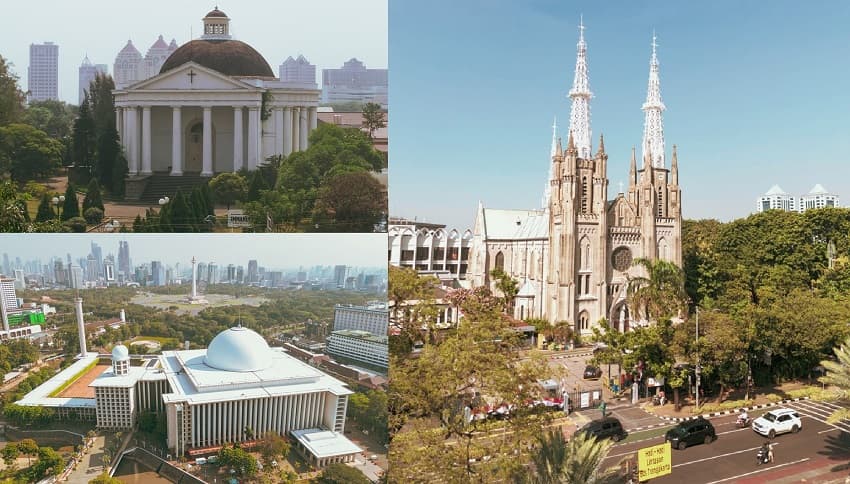
A trio of astounding places of worship border around Merdeka Square, presences symbolic of Indonesia’s mission to uphold religious diversity.
Guide to Monas: Indonesia's National Monument in Jakarta
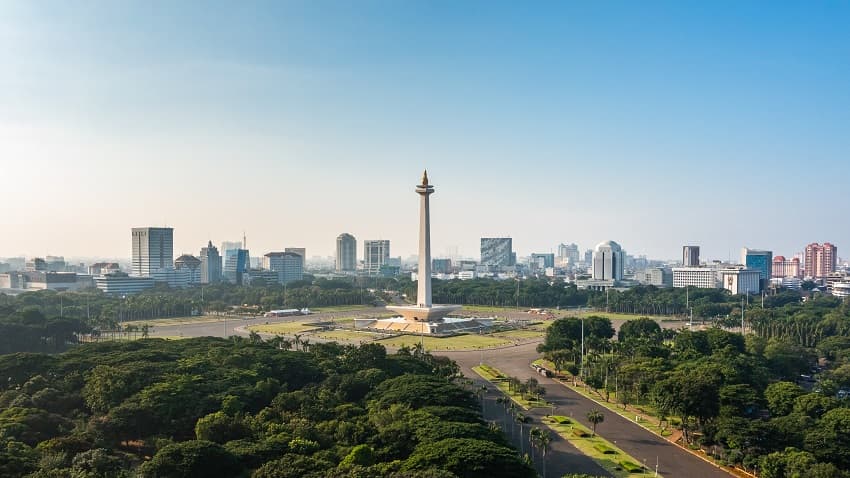
The heart of Jakarta lies in Medan Merdeka, a sprawling, 75-hectare open square with its epic centrepiece: Monas, or Monumen Nasional.

Sharing Iftar Moments in Togetherness
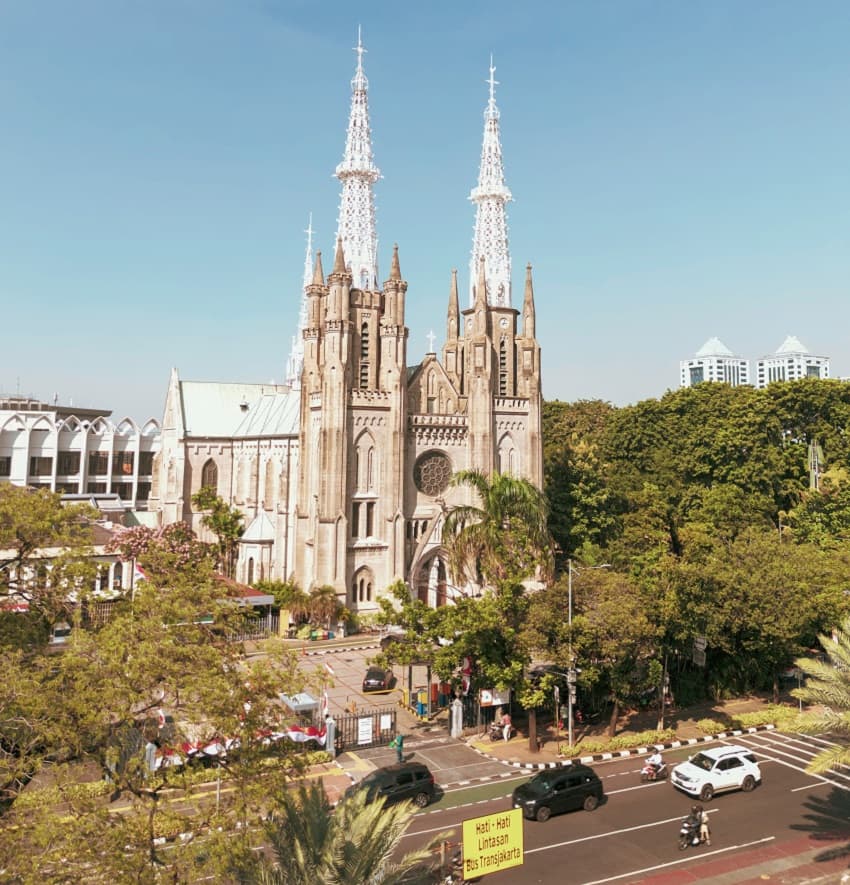
Jakarta Cathedral: A Neo-Gothic Masterpiece in Indonesia
A vision of towering spires and intricate stonework, the Jakarta Cathedral, is a masterpiece of Neo-Gothic architecture.