Bonded by History, Tied by the Future
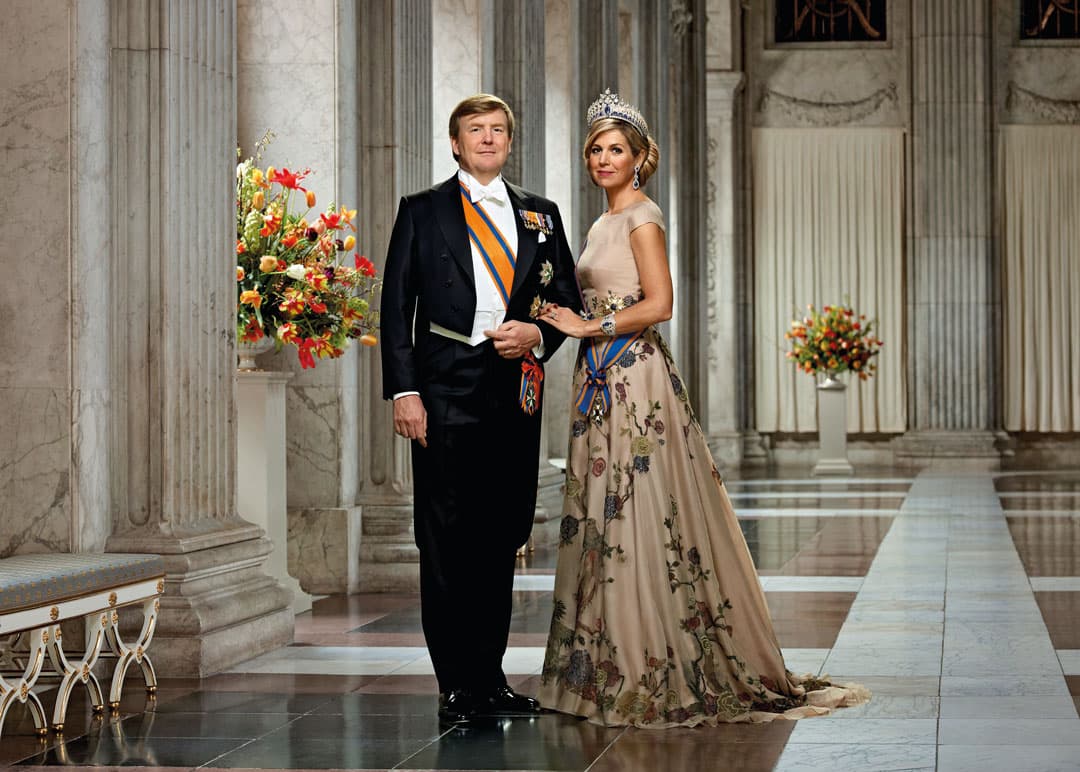
Just at the onset of the outbreak, NOW! Jakarta spoke to Lambert Grijns, Ambassador of The Netherlands to Indonesia, on the recent royal visit and what the future holds for bilateral relationship.
The visit of the King and Queen was very successful indeed, both from a political and an economic point of view. At the end of the visit, the Royal couple expressed their profound gratitude to the Indonesian hosts, who helped organise an impeccable state visit and who made them feel very welcome. Since the Royal couple was accompanied by several (vice-) ministers, a huge trade delegation and an impressive amount of journalists, nine separate programmes had to be organised to different destinations in Indonesia. All in all this resulted in a further strengthening of the bilateral ties between our two countries, a substantial increase in investments and trade deals and quite a few concrete deliverables. We were deeply saddened by the tragic boat accident that happened just prior to the State Visit, while preparing the delegation’s visit to Kalimantan.
On 17 August 2020, it will be 75 years since Indonesia issued its Proklamasi, claiming its place among independent and free states. The Dutch government explicitly acknowledged this fact, both politically and morally, 15 years ago. In his statement, the King warmly congratulated the people of Indonesia with 75 years of independence, and, while emphasising the future-oriented character of our bilateral relationship, also said: “It is a good thing that we continue to face up to our past. The past cannot be erased, and will have to be acknowledged by each generation in turn”. President Jokowi ended his statement by saying, “We certainly cannot negate history... but we can learn so much from the past.” In our relationship with Indonesia we will therefore always have to include our past, our present relationship and our common future.
Both countries are very committed to further building an equal relationship based on mutual respect and for mutual prosperity. Those who will put these words into concrete action are not only the two governments but also, and more importantly, Indonesian and Dutch companies, artists, students, scientists, tourists, etc. People-to-people contacts are the backbone of our relationship. It is impressive to see so many, especially young people, who show up at our events at the Erasmus Huis in Jakarta. They are intrigued by the Netherlands, they want to study there. The Netherlands in fact is the second most popular destination for students in the EU, there are literally tens of thousands of Indonesian alumni with a background in the Netherlands. At the same time, we see so many Dutch people who have an interest in Indonesia. Young people, the third generation after 1945, in search of their identity and looking for their roots, students who want to study in Yogyakarta, a lively cultural and scientific exchange… Not to forget the hundreds of Dutch companies and delegations visiting Indonesia on an annual basis. In short, it is these people who in the end give meaning to the words ‘equal partnership’.
Both countries are very committed to further building an equal relationship based on mutual respect and for mutual prosperity.
There were a large number of business people accompanying the royal couple, 185 in all, does this mean that Indonesia is still viewed as a potential destination for investment? Were there any negative comments or serious questions raised by the visiting delegates?
The Netherlands is by far the biggest European investor in Indonesia, and quite a few Dutch companies are considering investing more. So yes, Indonesia is still being viewed as a potential destination for investment. Having said that, as for all entrepreneurs in the world, Dutch companies do need a stable and reliable business climate to thrive. Therefore, we used this mission to raise these issues with Indonesian authorities. What does Indonesia want from foreign companies – e.g. knowledge sharing and local production – but also what do foreign companies need in terms of business climate to make that happen? A visit like this offers a great occasion to exchange thoughts on such matters.
I think it is also important to mention that many of the companies that took part in the mission are or have been active in Indonesia since quite some time. Most of them are already quite aware of opportunities and challenges. You need to be well prepared and have a long term vision to be successful in Indonesia. Aside from that, a mission like this of course also offers new companies the opportunity to gain more insights as to how suitable the Indonesian market is for their product and services.
Actually most, if not all, of the proposed business deals are innovative and dealing with new, sometimes high tech areas. The trade delegation focused on SDG-based sectors such as circular economy, life sciences and health, and water technology. Don’t be mistaken, what you call ‘old favorites’ are in fact full of innovation. Take Agriculture and Food: the Netherlands is the second largest exporter in the world in this field. That requires absolute high-tech, state of the art technology. Look for instance at a company like East-West seeds with extraordinary innovative techniques. Talking about high tech, one of the announcements during the mission was the establishment of a Signify 3D printing factory for light fixtures in Indonesia, or for example HyET and Pertamina which together are going to set up a factory for flexible solar cells.
The slogan of the mission was “Smart Solutions for a Sustainable Future” and with participants varying from “The Ocean Cleanup” to Philips Healthcare, and many lesser known names with exciting innovative and practical products, we definitely delivered on that.
As for the more economically oriented G2G cooperation; most of our cooperation with Indonesia is embedded in MoUs, which we have signed over the last couple of years. We are trying to make these MoUs really work, and focus on implementation rather than signing many new MoUs. Furthermore, we want to keep them relevant and compatible to new developments or challenges, such as waste and circular economy. An MoU in a way provides the umbrella under which governments can work together. But we also see an increase of government to business cooperation, rather than a government to government approach.
Personally, I’m very much impressed by the efforts of Indonesian Minister of Foreign Affairs Retno Marsudi in engaging women to the Afghan peace process, an effort which we try to support by our MoU on Women, Peace and Security. In the field of women’s empowerment we are encouraged by and support the many voices in Indonesia, both from men and women, who are opposing further limitations to women’s rights. In my view gender equality can be addressed both from a human rights perspective and from an economic perspective: actually investing in gender equality can give a spectacular boost to economic growth and at the same time to reducing economic inequalities, an aspect which is often overlooked.
The state visit left us with a lot of homework. For instance, the organisation of a special week focused on education and science (WINNER), and the dozens of private initiatives taken by Dutch and Indonesian citizens and organizations to start cooperation in the field of culture, nature conservation, sustainable tourism, shared heritage etc. In economic terms we will build upon the achievements and relationships built during this mission, and work towards new results in fields like circular economy, maritime, life sciences and health and agriculture and food. Over the next months, you will, for example, see the new Signify 3D printing factory being opened, or further steps in the establishment of renewable energy, or a new Frisian Flag production facility. Those things don’t happen overnight, but a mission like the one we had is a way to help such investments along.
Actually, I had plans to relax a bit and celebrate the success together with all those excellent, hardworking and dedicated team members of the Embassy who had made this possible. I am planning to travel to the destinations which the King and the Queen visited and express my gratitude to the local authorities, universities, NGOs, companies and citizens who worked tirelessly in preparing the State Visit. But the reality now is that we are working very hard to deal with the consequences of the global Corona crisis, so that I have to postpone my plans for a bit. Never a dull moment in Indonesia!